
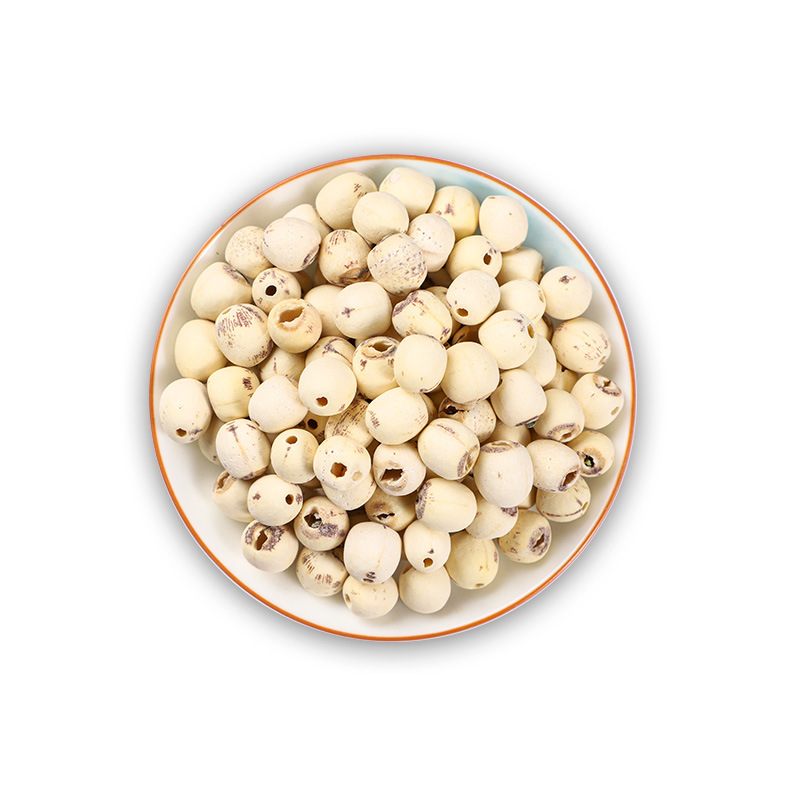
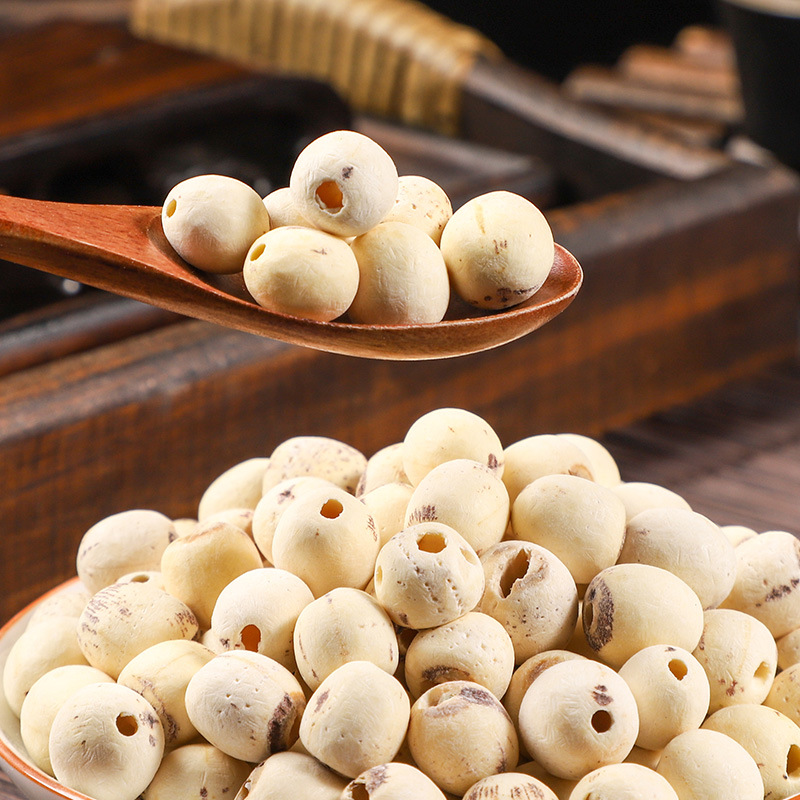
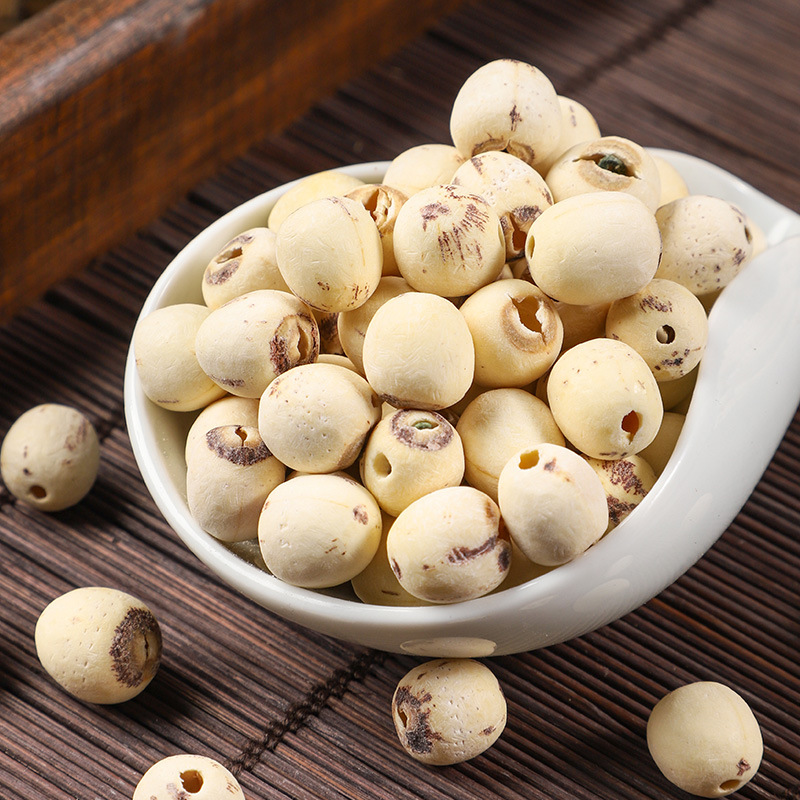
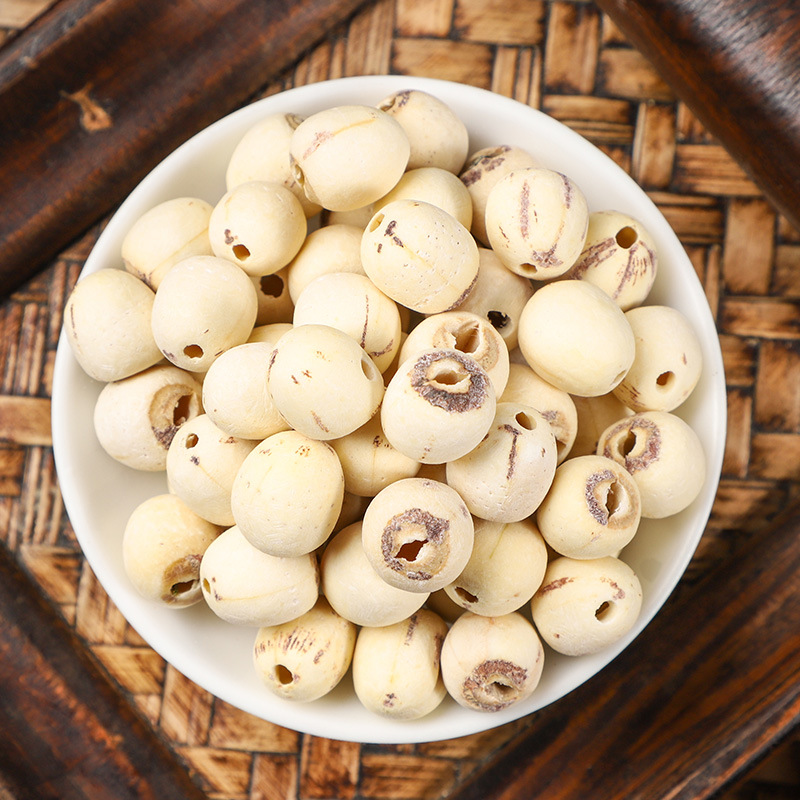
Description
I. Nutritional Value of Lotus Seeds
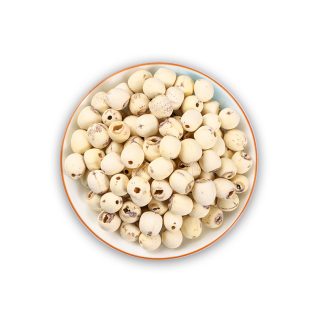
Lotus seeds contain nutrients such as protein, potassium, phosphorus, magnesium, and iron, as well as polyphenols (such as lotusine), dietary fiber, and small amounts of B vitamins. Dried lotus seeds contain 15%-20% protein, making them an excellent source of protein from plant-based foods.
II. Efficacy in Traditional Medicine and Modern Research
1. Nourishing the Heart and Calming the Mind
Traditional Chinese medicine believes that lotus seeds enter the heart meridian and can improve symptoms such as palpitations and insomnia. Modern research has found that alkaloids in lotus seeds (such as lotusine) can alleviate anxiety and help improve sleep quality by regulating neurotransmitters.
2. Strengthening the Spleen and Relieving Diarrhea
Lotus seeds contain tannins and starch, which can protect the gastrointestinal mucosa and relieve diarrhea. Traditional Chinese medicine often uses lotus seeds in combination with yam and poria to treat indigestion caused by spleen deficiency.
3. Antioxidant and Anti-inflammatory Effects
Lotus seed polyphenols can scavenge free radicals and reduce oxidative stress. Animal experiments have shown that lotus seed extract can reduce the level of inflammatory factors and has a certain inhibitory effect on chronic inflammation.
4. Helps control blood sugar: The resistant starch and dietary fiber in lotus seeds can slow down sugar absorption, and moderate consumption can help maintain stable blood sugar levels. However, attention should be paid to the amount consumed (it is recommended not to exceed 30 grams of dried lotus seeds per day).
Reviews
There are no reviews yet.